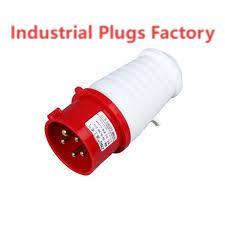
Specifying the correct power interface early in a project prevents downtime and improves safety; the Industrial Plug frequently becomes the rugged bridge between stationary supply equipment and mobile loads, and many engineers rely on proven connector families to match rating, sealing, and maintenance needs. For these reasons the Industrial Plug is treated as a system component — its selection influences cabling practices, protective device sizing, and lifecycle maintenance plans.
Core design and contact metallurgy
Reliable performance begins with contact design and material choice. Machined copper-alloy contacts with silver or nickel plating combine low resistance with wear resistance across repeated mating cycles. Contact geometry, contact area, and plating thickness determine current-carrying capacity and transient heating behavior. Insulating housings must resist tracking and thermal ageing; thermoset materials or high-performance polymers are chosen where elevated operating temperatures or chemical exposure occur. Evaluating contact resistance under load gives a practical metric for long-term performance.
Environmental sealing and enclosure strategy
Ingress protection is essential in industrial settings. Properly engineered seals — gaskets, O-rings, and cable glands — maintain dielectric separation and prevent particulate, moisture, and chemical ingress. Installers should specify an IP or NEMA level consistent with expected exposure: washdown areas, dusty processes, and outdoor applications each drive different sealing and corrosion requirements. Corrosion-resistant finishes and stainless fasteners reduce mechanical seizure in aggressive atmospheres, and a thoughtful cable-entry plan preserves seal integrity during maintenance and upgrades.
Mechanical retention, strain relief and mounting
Electrical reliability depends on mechanical integrity. Robust strain-relief systems prevent conductor movement that would otherwise stress terminations and increase contact resistance. Choose clamps and cord-grip designs that accommodate the cable diameter range while allowing vibration tolerance. Mounting surfaces should be reinforced with backing plates for thin panels, and multi-point anchoring spreads load to avoid localized stress. For mobile equipment, secondary retention features — captive locks or threaded collars — prevent accidental disengagement while in operation.
Installation, testing and certification practices
Ease of installation reduces field errors and speeds commissioning. Clear torque specifications, captive screws, and accessible termination points lower the risk of loose connections. Vendors should provide factory test data: endurance cycles, contact resistance, dielectric strength, and thermal rise measurements. Confirm compliance with applicable standards (IEC, UL, or local codes) to ensure safety and procurement acceptance. During commissioning, verify insulation resistance, phase rotation where applicable, and torque on all terminations to manufacturer recommendations.
Thermal planning and electrical loading
Heat is a primary failure mode for high-current interfaces. Proper conductor sizing, adequate contact area, and correct torque minimize resistive heating. For sustained high loads, consult derating curves and consider ventilated mounting or conductive backplates to help dissipate heat. Also account for ambient conditions: sunlight, radiant heat from nearby equipment, or enclosure density can elevate operating temperatures and shorten component life. Protective devices should be coordinated with both conductor ampacity and connector ratings to prevent overload-induced damage.
Safety features and interlocks
Mechanical latching mechanisms and keyed designs improve connection security and operator safety. Interlocks that prevent live mating, visible engagement indicators, and optional earthing contacts reduce the risk of unsafe procedures. In hazardous environments, choose designs that minimize sparking during mate/demate cycles and consider inherently safe coupling methods where required by regulations.
Modularity, spare parts, and maintainability
Selecting connectors from a modular family simplifies stocking spares and reduces downtime. Replaceable contact inserts, interchangeable seals, and common mounting footprints allow rapid field repairs without full body replacement. Maintain an inventory of genuine seals and contact kits, and record mating-cycle counts for high-use points so wear can be anticipated and managed proactively.
Application-specific adaptations
Different industries impose unique demands: food and beverage requires washdown-capable designs; mining demands extreme impact resistance; marine operations emphasize corrosion compatibility. Tailor material selection, sealing approach, and mechanical retention to the primary risk factors of each environment rather than defaulting to the highest-rated, most expensive option.
Lifecycle care and preventive maintenance
Routine inspection schedules focused on contact discoloration, torque retention, and seal condition catch early signs of degradation. Establish torque values and inspection intervals in asset documentation, and log repair actions to build a maintenance history. Proactive replacement of high-wear components and timely finish touch-ups prevent small issues from developing into failures.
When projects require validated test reports, application notes, or guidance on selecting the appropriate product family for specific environments, reviewers and specifiers can consult detailed technical materials and case studies at: https://www.nante.com/news/industry-news/what-is-industrial-plug.html

 English
 Arabic
 French
 Spanish
 Deutsch
 Turkish
 Dutch
Dutch
 Italiano
 Russian
 Romaian
 Portuguese (Brazil)
 Greek
Greek