Introduction
You have an embroidery machine humming with potential and a head full of ideas for custom apparel, gifts, or products. But when you try to bring a complex logo or detailed artwork to life in thread, the result can be disappointing. Puckered fabric, blurred details, and broken threads often trace back to a single point of failure: the digital file itself. This is where the expertise of professional digitizers for embroidery becomes your most valuable asset. A digitizer is the translator who converts your visual concept into a language of stitches that your machine can execute flawlessly. Understanding how to find, brief, and collaborate with the right digitizer is the surest path to achieving high-quality, professional embroidery every single time. This guide will show you exactly how to make that partnership work.
What Does a Professional Digitizer Actually Do?
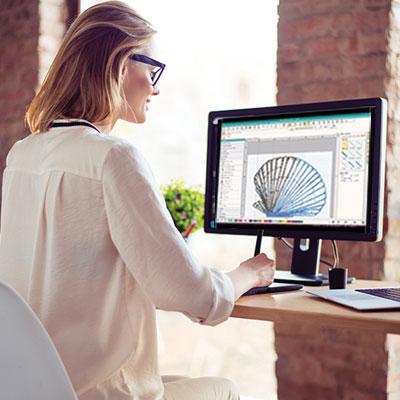
Let's move beyond the basic idea of "file conversion." A professional digitizer is an engineer and an artist working in thread. They use specialized software (like Wilcom Hatch or Pulse) to manually create a stitch blueprint from your artwork. This involves making hundreds of micro-decisions that a machine or automated service cannot replicate:
-
Stitch Path Engineering: They plot the exact needle path, minimizing long jumps and grouping colors logically for efficiency and a clean back.
-
Underlay Construction: Before a single top stitch is placed, they build a hidden foundation of stitches. This underlay stabilizes the fabric, prevents puckering, and creates a perfect base for the design to sit on.
-
Pull Compensation: They proactively adjust shapes (like slightly widening the inside of an "O") to counteract the natural pull of the thread, ensuring circles stay round and corners stay sharp.
-
Density Calibration: They set the precise number of stitches per square inch—too dense and the design is stiff; too sparse and the fabric shows through.
-
Fabric-Specific Strategy: They digitize differently for a stretchy knit hat than for a stiff canvas bag, adjusting every parameter for the target material.
This manual, thoughtful process is what separates a high-quality, durable embroidery file from a cheap, problematic one.
The Three Pillars of Getting High-Quality Designs
Consistent quality doesn't happen by accident. It's built on three foundational pillars.
Pillar 1: Start with Superior Artwork
You cannot get a high-quality stitch-out from a low-quality image. The digitizer's output is directly constrained by your input.
Provide the Best Possible File:
-
Vector Files are King: Always provide your original .AI, .EPS, .PDF, or .SVG file if you have it. These formats use mathematical paths, not pixels, allowing for infinite scaling and perfectly clean edges—a digitizer's dream.
-
If You Only Have a Raster Image: A high-resolution .PNG (with a transparent background) or .JPG (minimum 300 DPI) is your next best option. The image should be crisp, with clear contrast and minimal unnecessary detail.
-
Communicate the Brand: Include any official brand color codes (PANTONE, RGB, HEX) so the digitizer can match thread colors as closely as possible.
Pillar 2: Choose the Right Digitizer (Not Just the Cheapest)
The market is flooded with options, from $5 gigs on freelance platforms to established specialty firms. Price often reflects skill and process.
Your Vetting Checklist:
-
Portfolio of Stitch-Outs, Not Just Screen Images: Anyone can show a pretty software simulation. A true professional shows photographs of their designs stitched on actual fabric. Look for crisp details, smooth satin stitches, and no puckering.
-
They Ask Detailed Questions: A quality digitizer will ask about the target fabric, the finished size, and the garment type (e.g., left chest on a polo, center back on a hoodie) before giving a quote. If they don't ask, they aren't planning for success.
-
They Offer a Test Sew-Out: This is the non-negotiable hallmark of a professional. They should stitch the design on appropriate material and provide a photo or video as proof of quality before delivering the final file. This demonstrates they stand behind their work.
-
Clear Communication & Process: They explain their timeline, revision policy, and file delivery format. You should feel like you're entering a collaborative partnership.
Pillar 3: Master the Art of the Brief
Clear communication from you sets the digitizer up for success. A vague request leads to guesswork and revisions.
Your Brief Must Include:
-
Final Size: "3 inches wide," "4.5 inches tall," etc.
-
Target Fabric: "Heavyweight cotton hoodie," "structured trucker cap," "stretchy athletic polyester," or "plush towel."
-
Garment & Placement: "Left chest logo on a polo shirt," "Full back design on a jacket."
-
Thread Color Guidance: "Use closest PANTONE 2945 C," or "Match the blue in the attached logo."
-
Any Special Requests: "Minimize stitch count for faster production," or "Prioritize durability for workwear."
The Collaborative Workflow for Guaranteed Quality
Follow this step-by-step process with your chosen digitizer to ensure a perfect outcome every time.
Step 1: Initial Quote & Consultation
You provide your artwork and the brief above. The digitizer reviews it, asks clarifying questions, and provides a firm price and timeline. You agree on terms.
Step 2: The First Draft & Test Sew-Out
The digitizer creates the file and performs their internal test sew-out. They should send you two things: the digital PES/DST file and clear photographs or a video of the physical test stitch. Review the test critically. Do the elements align? Is the text clear? Does it look flat and puckered or smooth?
Step 3: Intelligent Feedback
Provide specific, actionable feedback on the test. Instead of "It looks off," say: "The satin stitch border on the right side appears looser than the left," or "The small text is filling in and losing definition." Good digitizers for embroidery expect and welcome this precise feedback, as it helps them perfect the file.
Step 4: Final Revisions & File Delivery
The digitizer makes the adjustments, does a final verification stitch if needed, and then delivers your production-ready file package. This typically includes the machine file (e.g., .DST for most commercial machines, .PES for Brother) and a visual report.
Red Flags That Lead to Low Quality
Avoid these common pitfalls:
-
The Ultra-Cheap Quote: A $10 digitizing job for a complex logo almost always means automated software, no test sew, and no manual refinement.
-
Instant Turnaround: Quality digitizing is a thoughtful process. A 15-minute turnaround is a sign of automated, no-touch conversion.
-
No Questions Asked: If they don't inquire about fabric or size, they are not engineering a file; they are running an automated process.
-
No Physical Proof: Never accept a file without seeing it stitched out. The screen lie is real—a design can look perfect in software and fail horribly on fabric.
When High Quality Matters Most
While aiming for quality is always best, it's absolutely critical for:
-
Business Logos & Branded Apparel: Your embroidered logo is a direct reflection of your company's quality.
-
Detailed Illustrations & Photorealistic Portraits: These require expert handling of shading, texture, and detail.
-
High-Volume Production: A flawed file causes delays, waste, and cost overruns on every single item.
-
Difficult Fabrics: Stretchy, sheer, or textured materials demand expert digitizing strategies to prevent disaster.
Conclusion: Investing in Quality is Your Strategic Advantage
High-quality embroidery isn't a happy accident; it's the direct result of partnering with skilled digitizers for embroidery and engaging in a smart, collaborative process. By providing excellent artwork, choosing a digitizer who prioritizes testing and communication, and giving clear, specific feedback, you build a system that yields flawless results consistently.
Think of it as an investment, not an expense. The slightly higher upfront cost of professional digitizing saves you money on wasted materials, rescues your time from troubleshooting, and protects your reputation by ensuring your final product looks impeccable. In the world of custom embroidery, the quality of your digital file is the single greatest determinant of your success. Choose your digitizer as carefully as you choose your thread and fabric, and you'll hold high-quality designs in your hands every time.

 English
 Arabic
 French
 Spanish
 Portuguese
 Deutsch
 Turkish
 Dutch
Dutch
 Italiano
 Romaian
 Portuguese (Brazil)
 Greek
Greek