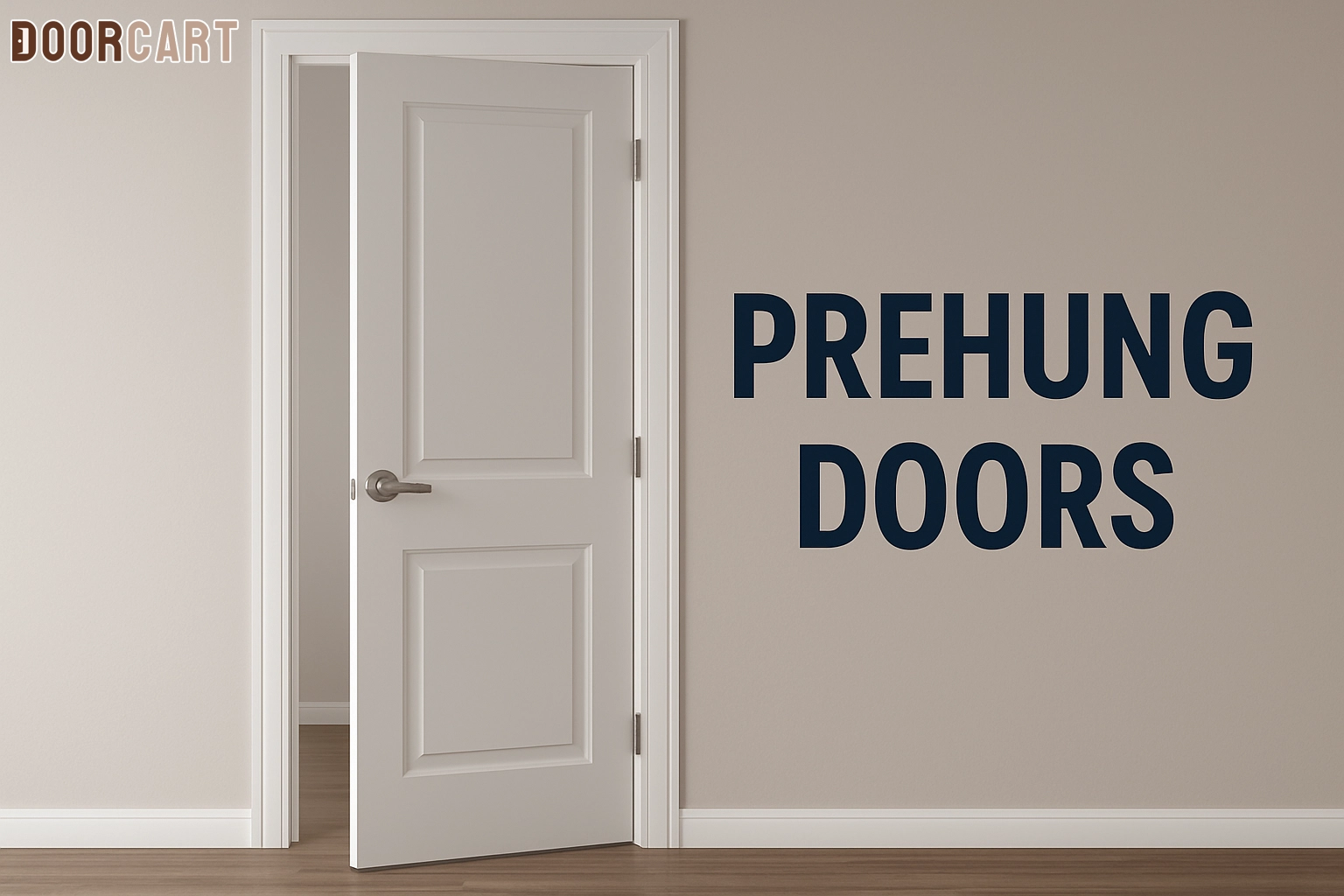
In the vast landscape of home renovation and construction across Canada, from the Victorian character homes of Toronto to the modern builds in Calgary's suburbs, one component consistently plays a pivotal yet understated role: the door. More specifically, the prehung doors. For Canadian homeowners, builders, and DIY enthusiasts navigating the unique challenges of the local climate and market, understanding the prehung door is not just a matter of convenience—it’s a key to efficiency, quality, and long-term performance. This guide delves into everything you need to know about prehung doors in the Canadian context.
What Exactly is a Prehung Door?
Let’s start with the basics. A prehung door is a complete door system sold as a single, factory-assembled unit. Unlike a traditional "slab door" (just the rectangular piece of wood or material that swings), a prehung package includes:
-
The Door Slab: Already sized, sanded, and pre-drilled for hardware.
-
The Frame (Jamb): The two vertical side jambs and the horizontal head jamb, precisely joined.
-
The Hinges: Already mortised (recessed) into both the door and the jamb, and attached with pins.
-
The Door Stop: The moulding attached to the jamb that the door closes against.
-
Often, the Threshold (for exterior doors) and preparation for a lockset.
In essence, it's a door that is "hung" in its frame before it arrives at your home. This plug-and-play approach stands in stark contrast to the traditional, more labour-intensive method of building a frame from scratch, chiselling hinge mortises, and painstakingly aligning a slab door—a process prone to error that can lead to drafts, sticking, and security gaps.
Why Prehung Doors are a Canadian Renovation & Building Standard
The adoption of prehung doors across Canada is driven by a compelling blend of practicality suited to the national character.
1. Climate-Controlled Precision & Weatherproofing:
Canada's extreme temperature swings, from humid summers to freezing winters, demand doors that seal tightly. Prehung doors, especially exterior ones, are often assembled in climate-controlled factories. This ensures that the wood components are stable and the joinery is perfect, minimizing the risk of warping or swelling after installation. Most exterior prehung units come pre-fitted with an integrated thermal break and foam insulation cores, meeting and often exceeding provincial energy codes (like Ontario's SB-12 or BC's Step Code). They are also pre-grooved for weatherstripping, creating a critical barrier against icy drafts and driving rain—a non-negotiable feature from Vancouver Island to Newfoundland.
2. Time is Money (and Warmth):
The Canadian construction season is famously finite. For builders on a tight schedule before the snow flies, prehung doors are a godsend. Installing a prehung interior door can take a competent DIYer or pro 30-60 minutes, versus several hours for crafting a frame and hanging a slab. For a new build or full-house renovation, this time saving multiplies dramatically, reducing labour costs and getting the home sealed up faster against the elements.
3. DIY-Friendly for the Canadian Handyperson:
Canada has a strong culture of DIY home improvement. Major retailers like Home Depot, Lowe's, and Rona across the country stock a wide variety of prehung doors, making them highly accessible. For a homeowner tackling a basement suite, updating bedrooms, or replacing a worn-out entry, a prehung door simplifies the most technically challenging parts of the job. The hinge mortises are perfect, the hinge pins are aligned, and the reveal (gap around the door) is consistent—outcomes that are difficult for even seasoned amateurs to achieve consistently with raw materials.
4. Consistent Quality and Aesthetic Appeal:
Factory manufacturing ensures a level of precision and finish that is hard to replicate on-site. The joints are square, the surfaces are smooth, and the details are crisp. This is crucial for the clean, finished look Canadians expect in modern homes. Furthermore, the range of styles available prehung—from classic 6-panel colonial doors suited for a Halifax heritage home update to sleek, flat-panel modern doors for a Vancouver condo—is vast, including popular Canadian species like maple and hemlock.
Key Considerations for the Canadian Buyer
Navigating the prehung door market in Canada requires attention to a few specific details.
-
Interior vs. Exterior: This is the primary distinction. Exterior prehung doors are built heavier, with insulated cores (often steel, fibreglass, or solid wood with insulation), full weatherstripping systems, and robust thresholds. Interior prehung doors are lighter, often with hollow or solid core options, and are designed for privacy and style rather than thermal performance.
-
Materials:
-
Steel: The dominant choice for Canadian exterior doors due to its supreme durability, security, and excellent insulation properties. Ideal for withstanding harsh weather.
-
Fibreglass: A premium choice gaining popularity. It offers superb energy efficiency, resists dents and corrosion, and can be convincingly textured to mimic wood grain.
-
Solid Wood: A traditional, beautiful option (like oak or mahogany) for both interior and exterior. Requires more maintenance in Canada's humid climates but offers unmatched classic appeal.
-
Engineered Wood (MDF, etc.): Common for interior doors. It's stable, affordable, and provides a perfect paint-ready surface, resisting the warping that can plague solid wood in variable indoor humidity.
-
-
Sizing – Mind the Metric: While many prehung doors are sold in standard nominal sizes (e.g., 30", 32", 36" wide by 80" tall), it's imperative to measure your rough opening in both inches and centimetres. Canadian building supplies can be a mix of imperial and metric, especially in older homes. Always measure twice, and confirm the unit's actual dimensions, not just its nominal size.
-
Hardware and Finish: Most prehung doors are "bore-and-prep" ready. This means they come with a hole pre-drilled for the lockset and a recess (mortise) for the latch strike plate. However, the actual handleset, deadbolt, and hinges (often just plain bearing) are usually sold separately, allowing you to choose your own style and finish (e.g., matte black, brushed nickel). Some premium units may include upgraded, durable hinge sets.
-
Fire-Rated Options: For doors leading from a garage into a house or in multi-unit dwellings, 20-minute fire-rated prehung doors are a building code requirement in most Canadian municipalities. These are clearly labelled and are essential for safety compliance.
The Installation Process in a Canadian Home
Proper installation is where the prehung door's advantages are fully realized. The basic steps involve:
-
Prepping the rough opening in the framed wall.
-
Applying a bead of sealant (especially critical for exterior doors to prevent moisture ingress).
-
Setting the unit into the opening, using shims to ensure it is perfectly level and plumb.
-
Securing the frame through the shims into the wall framing.
-
Re-checking the swing and adjusting shims as needed.
-
Applying expanding foam insulation in the gaps around the exterior door frame for an airtight, insulated seal—a vital step for Canadian energy efficiency.
-
Installing trim (casing) on both sides to hide the gaps and shims.
For exterior doors, particular attention must be paid to integrating with the weather-resistant barrier (WRB) of the house wrap and ensuring proper flashing at the top to direct water away—a crucial step to prevent rot and ice dam issues.
Conclusion: A Sound Investment for the Canadian Home
In the demanding Canadian environment, where energy costs are significant and the climate imposes real structural challenges, the prehung door is more than a convenience. It is a professionally engineered solution that guarantees a higher standard of fit, performance, and efficiency.
Whether you are a contractor looking to streamline a build in the Prairies, a Quebec homeowner seeking to upgrade to a more éconergétique entry, or a BC DIYer finishing a basement, choosing a quality prehung door means investing in a component that will provide smooth operation, enhanced security, and reliable thermal performance for years to come. It represents a smarter entry point—literally and figuratively—to a more comfortable, durable, and well-built Canadian home. By understanding the options and specifications relevant to the local market, you can make an informed choice that adds value, style, and resilience to your property.

 English
 Arabic
 Spanish
 Portuguese
 Deutsch
 Turkish
 Dutch
Dutch
 Italiano
 Russian
 Romaian
 Portuguese (Brazil)
 Greek
Greek