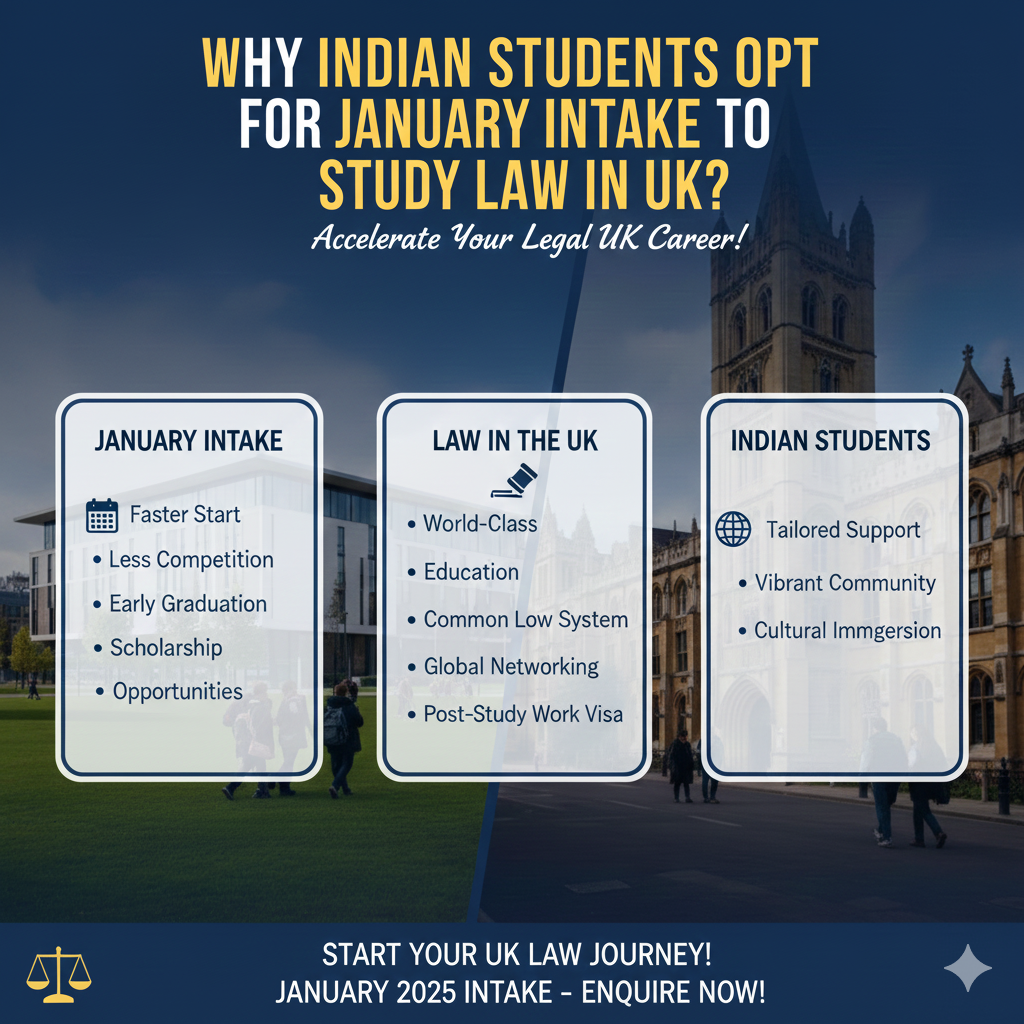
You know, every year thousands of Indian students pack their bags for the UK to chase a law degree it's one of those fields that just pulls in a lot from back home, thanks to the common law roots and the global punch a UK qualification carries. But while most folks aim for the big September start, a growing bunch are eyeing the January intake instead. It's not the main one, sure, but for law courses especially, it makes a ton of sense for many. Let's break down the real reasons behind this shift, based on how things play out for Indian applicants.
The Flexibility of Timing After Indian Exams
One big draw is simply the calendar. Indian board exams or undergrad results often trickle out late think May or June and by then, the September rush is pretty much wrapped up. Deadlines have passed, seats are filling fast. January gives that breathing room. You get those extra months to sort your scores, retake IELTS if needed, gather funds proof, or just decide if law in the UK is truly the move. No forced gap year staring you down. It's a smoother handover from Indian academics to UK studies, avoiding that awkward wait till the next fall.
Less Competition and Easier Admissions
January's secondary intake means fewer applicants overall. September? It's packed everyone's piling in. But come winter, the pool shrinks, so your profile stands out more. Admissions teams have time to really look at applications, respond quicker. For law programs, which can get competitive even at mid-tier unis, this bumps up chances, especially if your grades are solid but not Oxbridge-level. Rolling admissions at many places mean spots stay open longer too no single cut-off panic.
Course Availability in Law for January Starts
Not every law course runs in January top undergrad LLBs at places like Oxford or Cambridge stick to September mostly. But plenty do offer options, particularly postgraduate LLMs and specialized masters. Think University of Law with its MA Law conversions or Postgraduate Diplomas starting January. Others like Royal Holloway, Anglia Ruskin, Brunel, or Kent have law-related undergrad and postgrad entries. Queen's Mary or Coventry often list law modules too. It's more common for conversion courses, international law LLMs, or professional quals like SQE prep.
How to Choose Best Law Courses in UK
Choose best law courses in UK,the right one depends ultimately on your long-term goals. The law schools of the UK are the best in the world – the common law focus is directly aligned with India's system, which makes the qualifications either recognizable back in India or valid for Bar exams. If you want to pursue an undergraduate LLB, you should consider going to universities with good employability such as UCL, LSE, or King's College London even though January may be postgrad learning. What are the best bets for quality?Go for Russell Group or specialist like University of Law for practical training. Check rankings, QS or Times Higher put Cambridge, Oxford top, but for accessibility, mid-ranked like Queen Mary or Birmingham offer great value. Factor location (London for courts access), modules (international, commercial, human rights), and pathways to solicitor/barrister quals via SQE.
Practical Perks: Smaller Classes and Better Support
Starting mid-year often means smaller cohorts. More one-on-one with tutors, easier to grab internships or moot courts. Universities ramp up support for January starters extra orientation, housing help when demand's lower. Accommodation? Cheaper and easier to snag outside peak September frenzy. Even flights from India might cost less in the winter off-season.
Visa and Prep Timeline for 2026
For January 2026, things are tightening a bit higher funds proof needed (around £1,529/month London now), stricter English tests from early 2026. But off-peak means faster visa processing usually. Start apps summer 2025, aim offers by fall, CAS in hand for visa by December. Plenty of time if you plan ahead.
Planning to Apply for 2026 UK January Intake for Indian Students
If this sounds like your path, get moving early. Research unis offering law in January check sites directly, as lists change. Gather docs: academics, IELTS (7.0+ often for law), statement showing genuine interest. Apply for 2026 UK January intake for Indian students direct or via agents if needed. Deadlines vary, but many close October-November 2025. It's rolling often, so the earlier the better.
At the end of the day, January isn't for everyone; fewer courses, colder welcome weather-wise but for Indian law aspirants needing that extra prep window or facing September misses, it's a solid, practical choice. Aligns better with life back home, eases the pressure, and still lands you that respected UK law credential. If law's your field, weigh it seriously for 2026.

 English
 Arabic
 French
 Spanish
 Portuguese
 Deutsch
 Turkish
 Italiano
 Russian
 Romaian
 Portuguese (Brazil)
 Greek
Greek