The global Remittance Market Size is staggering, with formally recorded flows amounting to hundreds of billions of dollars annually. This colossal figure underscores the market's critical role as a major source of external financing for low- and middle-income countries, often surpassing the total amount of foreign direct investment (FDI) and official development assistance (ODA) combined. This flow of capital is a powerful engine for economic development, enabling families to invest in education, healthcare, and small businesses. The market has demonstrated remarkable resilience, most notably during the COVID-19 pandemic. While early forecasts predicted a catastrophic decline, remittance flows proved to be a stable and counter-cyclical lifeline, as migrants continued to support their families through the crisis. This stability and scale make the remittance market a cornerstone of the global financial system and a key focus for development economics and international policy.
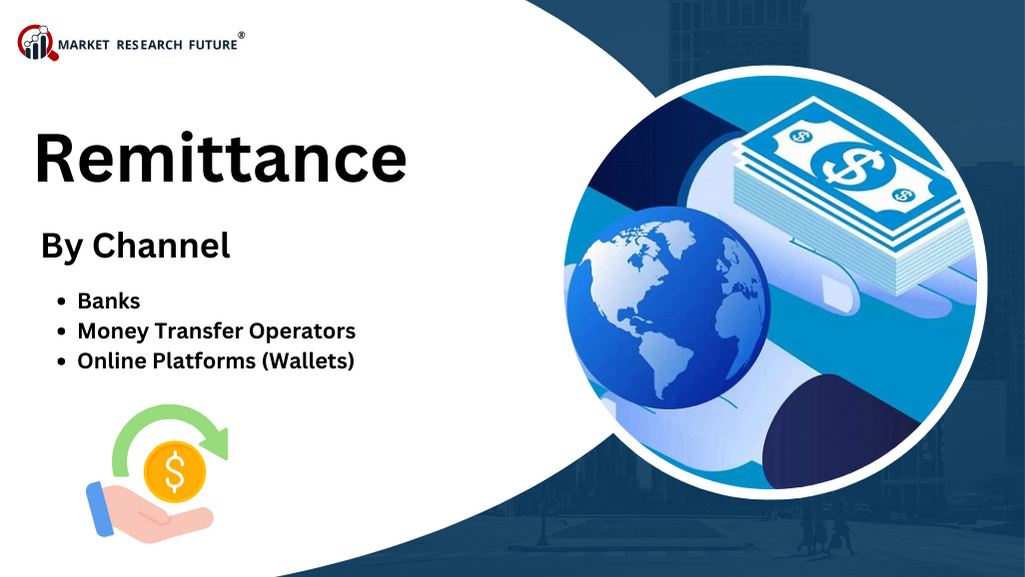
When breaking down the market size by the channels used, a significant transformation is underway. Historically, the vast majority of the remittance value was processed through traditional channels: cash-based transfers via Money Transfer Operators (MTOs) and international wire transfers via banks. These legacy players still handle a substantial portion of the market's total value, particularly in corridors where cash remains king. However, the share of digital and mobile-first players is growing at an exponential rate. While the average transaction size on a digital platform might be smaller, the sheer volume of transactions is exploding. This trend is driven by lower fees and greater convenience. As digital adoption increases on both the sending and receiving ends, the portion of the market size attributed to these modern channels is expected to accelerate, fundamentally reshaping the revenue landscape for the entire industry.
Geographically, the market size is defined by the value flowing through major remittance corridors. The US-Mexico corridor is consistently one of the largest in the world, with billions of dollars flowing south across the border each month. Another massive hub for remittance outflows is the Gulf Cooperation Council (GCC) region, where millions of migrant workers from South and Southeast Asia send a significant portion of their earnings home to countries like India, Pakistan, the Philippines, and Bangladesh. Within Europe, flows from wealthier Western European nations like Germany and France to Eastern and Southern European countries are also substantial. The size of these corridors is a direct function of the number of migrants, their average income in the host country, and the economic needs of their families back home, a fact that makes them sensitive to both immigration policies and economic conditions.
Looking beyond the officially recorded numbers, the true Total Addressable Market (TAM) for remittances is even larger. A vast, unrecorded informal market, operating through unregulated systems like hawala or through friends and family carrying cash, is estimated to be worth billions more. A key opportunity for the industry is to formalize these flows by offering services that are cheap, fast, and accessible enough to be a compelling alternative. Furthermore, the TAM is expanding into adjacent B2B and B2C segments, such as cross-border payments for freelancers, international students, and small businesses. With continued global migration, rising digital penetration, and a concerted global effort—including the UN's Sustainable Development Goal to reduce average remittance costs to below 3%—the market size is poised for continued, robust growth for the foreseeable future.
Explore More Like This in Our Regional Reports:
US Digital Storage Devices Market Share

 English
 Arabic
 French
 Spanish
 Deutsch
 Turkish
 Dutch
Dutch
 Italiano
 Russian
 Romaian
 Portuguese (Brazil)
 Greek
Greek